
Thermal Break vs Standard Aluminium: Which Is Right for Your Villa or Project?
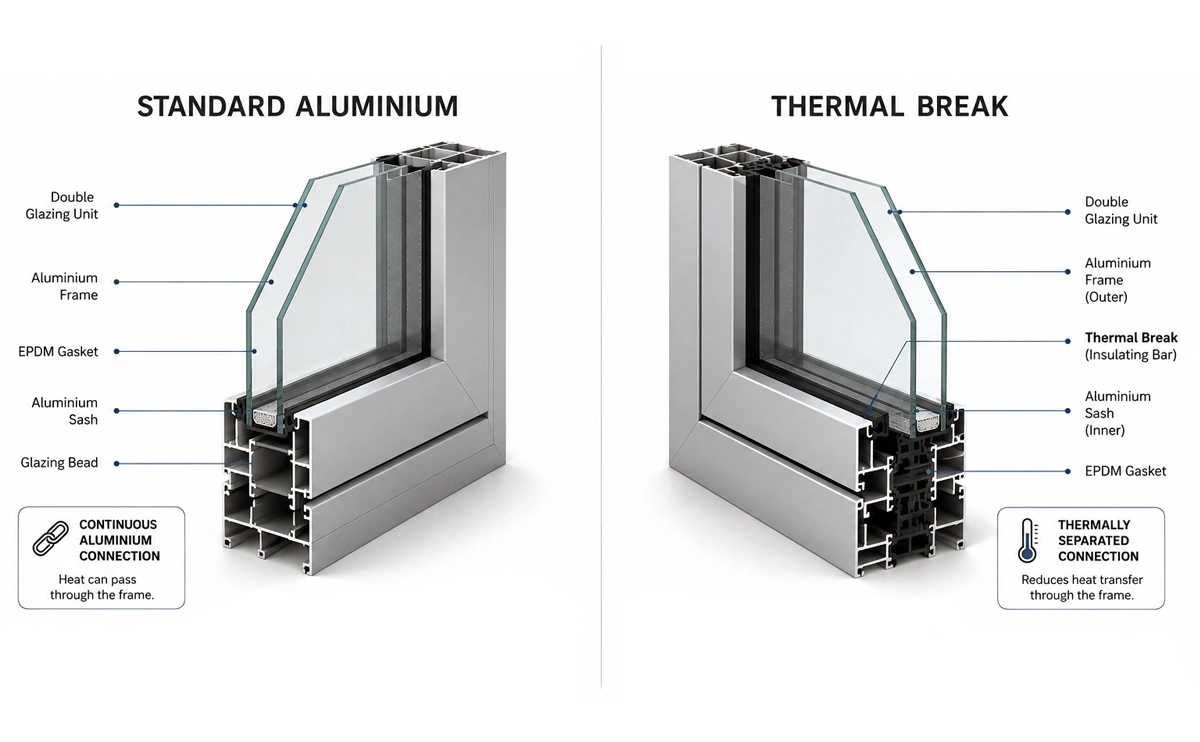
Thermal Break vs Standard Aluminium does not have one right answer for every project. A Thermal Break system includes an insulating separation within the aluminium profile, while Standard Aluminium uses a continuous aluminium frame.
Whether that difference is worth paying for depends on the opening, sun exposure, glazing, expected performance and budget. In Oman, heat and solar exposure make the choice relevant, but the frame is still only one part of the window specification.
Table of Contents
What Is the Difference Between Thermal Break and Standard Aluminium?
Standard Aluminium
Standard Aluminium uses an aluminium profile without a thermal separation inside the frame. The metal forms a continuous path between the outer and inner sides of the profile. It can suit projects where higher thermal separation is not a main requirement.
Thermal Break Aluminium
Thermal Break Aluminium separates the inner and outer aluminium sections with an insulating section inside the profile. This reduces the direct path for heat transfer through the frame. In technical specifications, you may also see thermally broken aluminium or thermally insulated aluminium system.
Aluminium can act as a thermal bridge because heat passes through the metal. A Thermal Break changes that path. The glazing still needs to be selected separately for the project.
Thermal Break vs Standard Aluminium: What Actually Changes?
The main difference is in the frame construction, but it also affects how the system is specified and priced.
| Factor | Standard Aluminium | Thermal Break Aluminium |
|---|---|---|
| Frame construction | No thermal separation in the frame | Includes an insulating separation within the profile |
| Heat transfer through the frame | More direct path through the aluminium | Reduces the direct heat-transfer path through the frame |
| Project suitability | Suitable for many applications | More relevant where frame performance is a higher priority |
| System cost | Usually the simpler, lower-cost system | Usually carries a higher system cost |
| Glazing | Selected separately | Selected separately; Thermal Break does not replace glazing |
| Selection basis | Application, glazing, budget and project requirements | The same factors apply, with more attention to frame performance |
Thermal Break is not a type of glass, and Standard Aluminium is not automatically a lower-quality system. The choice should reflect what the opening and project need.
When Is Thermal Break Worth Considering?
So, is Thermal Break worth it? It can be when the added thermal separation solves a real requirement in the project. Large or highly exposed glazed openings deserve a closer look at both the frame and the glazing. Thermal Break can also make sense in air-conditioned spaces where indoor comfort is a higher priority, or where the specification calls for a thermally insulated aluminium system.
Oman’s heat and solar exposure can make these choices more important. They do not mean every opening needs Thermal Break. Orientation, glass selection, opening type and room use should still guide the decision.
When Can Standard Aluminium Still Be the Right Choice?
Standard Aluminium can be practical when advanced thermal separation is not a main project requirement. That may include smaller or less exposed openings, spaces with simpler performance needs, or projects where upgrading every opening would add cost without solving a specific requirement.
Glazing, fabrication, sealing and installation still affect the finished window. If those parts are properly specified for the opening, Standard Aluminium can be a sensible option. It should not be treated as low quality simply because it does not include a thermal break.
Thermal Break and Double Glazing: Do You Need Both?
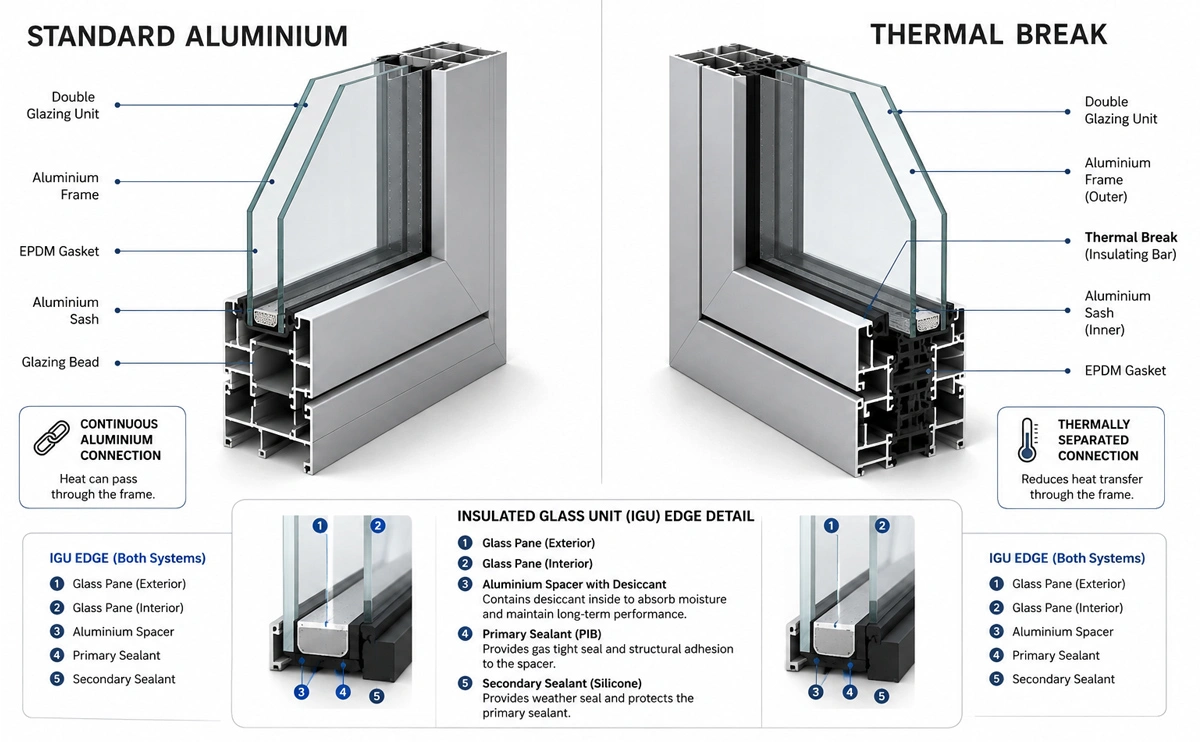
Thermal Break and Double Glazing refer to different parts of the window. Thermal Break is part of the aluminium frame. Double Glazing describes the glass unit. One does not replace the other.
A Double Glazed windows can use a Standard Aluminium frame, and a Thermal Break frame still needs the right glass specification. Hardware, fabrication, sealing and installation also matter. Compare the complete window specification rather than one feature on its own.
What Should You Compare Before Choosing a System?
Start with the opening itself. Check its size and configuration, where it sits in the building and how much sun it receives. Then review the glass unit, aluminium profile system, hardware, fabrication and installation scope. The quotation should make these details clear. Two prices may look similar while covering different profile systems, glass options, hardware or installation work.
For contractors, consultants and project owners, check the opening type, project requirements, expected performance and what the supplier has actually included. This gives you a clearer basis for comparison than the frame name or total price alone.
Which Should You Choose for Your Villa or Project?
Choose the system based on the project, not the label. Consider Thermal Break when opening size, exposure, indoor comfort requirements or the project specification make frame performance more important. Standard Aluminium can still be suitable where those requirements are lower and the rest of the window system is properly specified.
You also do not need the same system for every opening. Different areas of a villa or project can have different requirements.
FAQs
Is Thermal Break aluminium always better than Standard Aluminium?
No. Thermal Break can be useful when frame performance is a higher priority, but Standard Aluminium may still suit projects with simpler requirements. The right choice depends on the opening, glazing, exposure, expected performance and budget.
Is Double Glazing the same as Thermal Break?
No. Double Glazing refers to the glass unit, while Thermal Break refers to the aluminium frame. They address different parts of the window system, so one does not replace the other.
Does every villa in Oman need Thermal Break windows?
No. Oman’s heat and sun exposure make frame and glazing choices important, but every opening does not have the same requirements. Window size, orientation, room use, glazing and project specification should guide the decision.
Talk to ART Windows About the Right System for Your Project
If you are planning windows for a villa or project in Oman, ART Windows can review the opening, glazing and system requirements before preparing a quotation. This helps match the aluminium system to the actual needs of the project rather than choosing by product name alone.
References
- Fenestration and Glazing Industry Alliance. (n.d.). https://fgiaonline.org/resources/technical-resources/fgia-glossary/
- Ministry of Housing and Urban Planning. (2025). Oman energy efficiency and sustainability code. https://mohup.gov.om/pdf/open-data/codes/energy.pdf/
- National Fenestration Rating Council. (n.d.). National Fenestration Rating Council. https://nfrc.org/
- Energy-Efficient Windows. National Laboratory of the Rockies. https://docs.nlr.gov/docs/legosti/old/15860.pdf
- U.S. Department of Energy. (2021, December). Purchasing energy-efficient residential windows, doors, and skylights. https://www.energy.gov/cmei/femp/purchasing-energy-efficient-residential-windows-doors-and-skylights